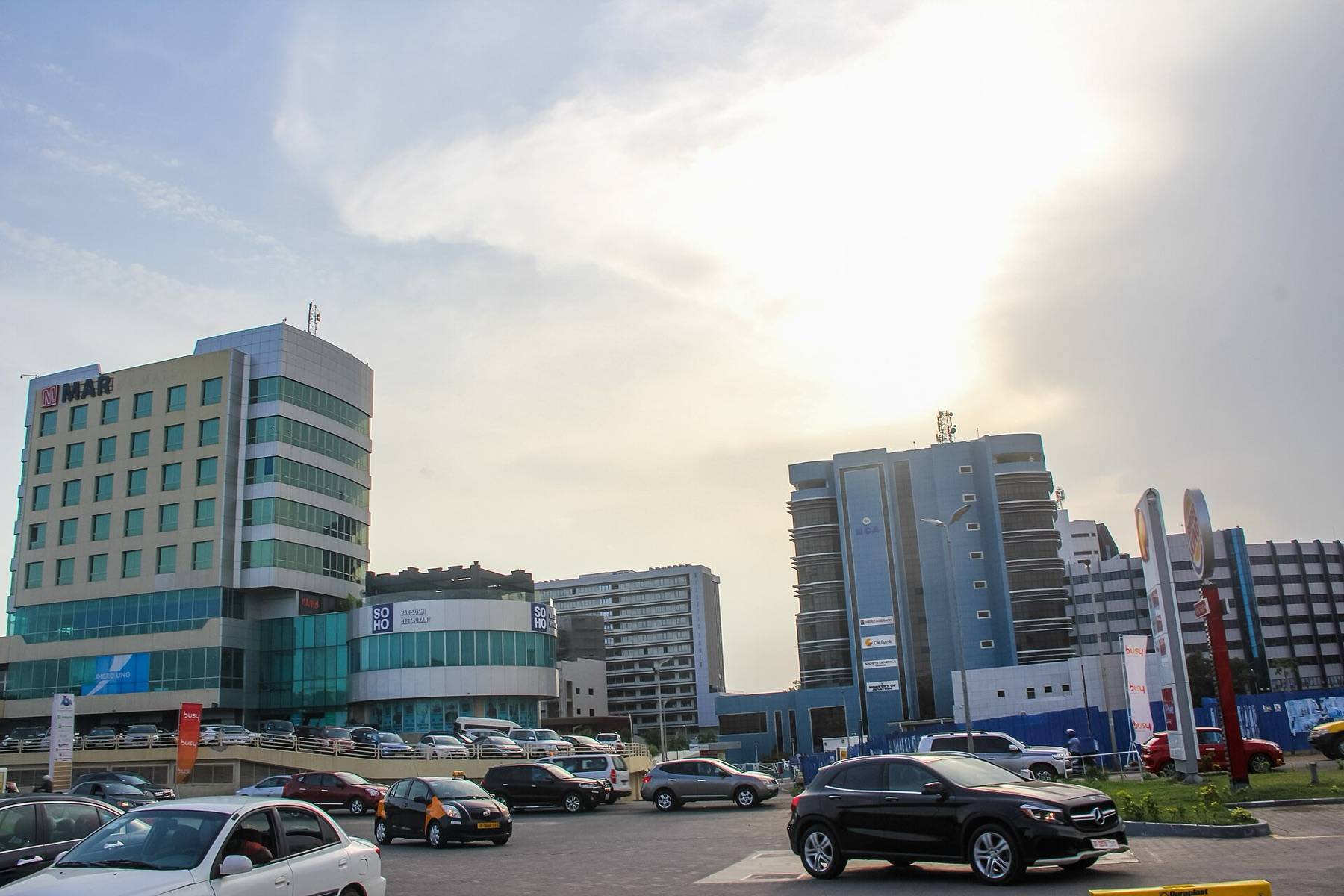

Across Africa, cities and states have produced climate action plans, resilience strategies and long lists of priority projects. Many of these plans are well researched, consulted on and politically endorsed. Far fewer of the projects in them reach financial close. When officials are asked why, the usual answer is that "the money is not there". Yet climate funds, development finance institutions and a growing number of private investors say the opposite: that they struggle to find enough well-prepared projects to finance.
Both statements are true, and the gap between them is the subject of this brief. Most subnational climate projects do not fail because a lender reviewed them and said no. They stall much earlier, because they never reach the point where a lender can assess them at all.
This brief sets out where that gap opens, what a bankable project actually requires, and the practical steps a state or city government can take in its first year to close the gap. It is written for officials in planning, finance and environment ministries at state and city level, and for the development partners who support them.
Why subnational governments matter
Much of the infrastructure that determines emissions and climate resilience is planned, built or regulated below national level. Urban transport, drainage and flood management, solid waste, street lighting, water supply, public buildings and land use are often state or municipal responsibilities. As cities grow, the decisions they take now about transport corridors, building standards and where people can safely live will shape both emissions and exposure to climate risk for decades.
Subnational governments also see climate impacts first. Flooding, heat, erosion and pressure on water supplies land on local roads, markets, clinics and schools. A national climate strategy can set direction and unlock international finance, but most of the physical work happens in states and cities.
That makes subnational project preparation one of the most important, and most neglected, links in the climate finance chain.
A plan is not a pipeline
A climate action plan answers the question "what should we do?". A pipeline answers a different one: "what can be financed, by whom, on what terms, and when?". The two are often treated as the same document, and that is where projects stall.
A project in a plan is usually described in a paragraph: a bus rapid transit corridor, solar power for public buildings, a flood defence scheme, a composting facility. A project in a pipeline is described very differently. It has:
- a defined scope, location and set of outputs
- a responsible agency with the legal authority to deliver it
- a cost estimate with a stated level of confidence
- a repayment or funding model
- a likely procurement route
- an inventory of the studies, approvals and land it still needs
- a realistic timeline to financial close
Lenders and climate funds can only engage with the second kind. Until a project has most of these elements, the conversation with a financier cannot move beyond general interest.
Sorting the existing list
The most useful first exercise for most governments is therefore not another round of project ideas. It is an honest sort of the existing list into three groups:
- Ready to structure: scope, site and owner are clear, and the remaining work is feasibility and financial structuring.
- Needs definition: the idea is sound, but the scope, site or responsible agency is still open.
- Policy or programme, not a project: important, but better delivered through the budget, regulation, standards or a grant programme than through project finance.
Most lists turn out to be heavy in the second and third groups. That is not a failure. It tells the government where to spend scarce preparation money, and it stops officials presenting ideas to lenders before they are ready, which can damage credibility for later projects.
The third group deserves particular respect. Building codes that require better insulation, land-use rules that keep new housing out of flood zones, or procurement standards for efficient lighting can achieve more than many individual projects, at almost no capital cost. They simply do not belong in a financing pipeline.
What makes a project bankable
"Bankable" is used loosely, but for a lender or climate fund it has a fairly specific meaning. A bankable project is one where the financier can see, with reasonable confidence, how its money will be used, what results it will produce, and how it will be repaid or justified. In practice, that comes down to five questions.
1. How will it be repaid?
Every financed project is repaid from somewhere. The main sources are:
- User fees and tariffs, for example bus fares, water charges or tipping fees at a waste facility.
- Savings on the government's own costs, for example lower electricity bills after solar and efficiency upgrades to public buildings, or lower maintenance costs from better drainage.
- Budget payments, where the government commits to pay for a service over time, as in an availability-payment arrangement.
- Results-based payments, where a funder pays on verified outcomes, such as emissions reduced or households connected.
- Grants and concessional finance, which reduce the amount that has to be repaid.
Climate projects that deliver mainly public benefits, such as flood defences or urban greening, rarely generate their own revenue. They can still be financed, but only if the government decides early that repayment will come from its budget, and can show that the payments are affordable alongside its other commitments. Too many projects are presented to lenders with the repayment question left open, in the hope that a funder will provide a grant. Some will, but most finance for infrastructure is repayable.
2. Is the project technically and environmentally sound?
Financiers need feasibility work proportionate to the size and complexity of the project: engineering, demand or usage forecasts, cost estimates, environmental and social assessment, and a climate rationale that shows how the project reduces emissions or builds resilience. Studies done as a formality, or done once and left to go stale for several years, leave too many open questions.
Environmental and social assessment in particular tends to start late, although it shapes site selection, design, cost and timing. Resettlement, land acquisition and community consultation often take longer than the engineering. Lenders apply their own safeguard standards, which can be more demanding than national requirements, so it pays to understand them from the start.
3. Who is the borrower, and can it borrow?
Many international climate funds and development finance institutions lend to or through national governments rather than directly to states and cities. Where they do lend to subnational entities, they look closely at the borrower's legal powers and financial position.
A state or city that wants to borrow, offer a guarantee or sign a long-term contract needs to know exactly what its legal powers are, which national approvals it needs and how long they take. In Nigeria, for example, state borrowing is subject to national fiscal responsibility and debt management rules, and external borrowing requires federal approvals. Discovering a missing approval after a lender has finished its due diligence can add a year to a project.
4. Is the borrower creditworthy?
Lenders assess the borrower as well as the project. They look for timely audited accounts, a credible budget, stable or growing own-source revenue, manageable existing debt and a record of paying contractors on time. A strong project from a weak borrower is a hard sell.
Strengthening revenue collection and financial reporting is slow, unglamorous work, but it widens every financing option the government has, from development bank loans to domestic bonds. Some Nigerian states, including Lagos, have raised money through bonds on the domestic capital market, an option that depends heavily on the issuer's financial credibility.
5. Can it be procured and delivered?
Finally, the financier needs to see a credible delivery route: a procurement method that complies with national law and the lender's own rules, a project team with the capacity to manage contracts, and a realistic timetable. Projects that will be delivered as public-private partnerships need additional preparation, including a business case, a value-for-money assessment and a clear allocation of risks between the public and private partners.
Matching projects to the right finance
Different types of projects suit different types of finance. A common mistake is to approach every funder with every project. A more productive approach is to match each project's characteristics to the sources most likely to fund it.
An illustrative example
The following is a hypothetical example, not a description of any real government. Consider a state with three priority projects in its climate plan.
Solar and efficiency upgrades for public hospitals and schools. The project reduces diesel and grid electricity costs, so it can largely repay itself from savings. It is modular, so it can start small and expand. This makes it suitable for a loan from a development bank or commercial lender, possibly through an energy service company that installs the equipment and is paid from the savings. The main preparation tasks are an energy audit of the buildings, a baseline of current energy spending, and agreement on how savings will be measured and paid.
A flood defence and drainage scheme for a low-lying district. The project protects homes, roads and markets, but it does not earn revenue. It is a strong candidate for grant or highly concessional finance from climate funds focused on adaptation, blended with the state's own budget. Preparation should focus on the climate risk analysis, the economic case (the damage avoided), environmental and social assessment, resettlement planning, and a maintenance budget so the asset is kept working after construction.
A bus rapid transit corridor. The project could earn fare revenue but is unlikely to cover its full capital cost from fares alone. It may suit a combination of public investment in the roadway and stations, with private operators running the buses under performance contracts. Preparation is extensive: demand modelling, route design, fare policy, integration with existing informal transport operators, and a decision on how much risk the private side should carry.
Three projects from the same plan need three different preparation paths and three different sets of funders. Treating them as one portfolio, with one preparation approach, slows all three.
Five gaps that stop projects early
Across many subnational governments, the same gaps appear again and again.
1. No clear repayment model. As described above, projects are often presented without a decision on how they will be repaid. Lenders cannot move until that decision is made, and it is a decision only the government can take.
2. Thin or stale feasibility work. Studies are commissioned with too small a budget, too narrow a scope, or so long ago that costs, conditions and standards have moved on.
3. Unclear authority to sign, borrow and receive funds. Legal powers and approval routes are investigated late, often only when a funder asks.
4. Weak financial reporting and own-source revenue. The borrower's financial position, rather than the project, becomes the obstacle.
5. Nobody owns the pipeline. Climate plans are often coordinated by an environment ministry or climate unit, while the projects sit with transport, water, energy or works agencies, and financing decisions sit with finance and planning. Without a small team with the mandate to move projects through preparation, each project waits for someone else to act.
What to put in place first
The most valuable early steps are not expensive. They are mostly about decisions, mandates and sequencing.
Name a pipeline owner
Create, or designate, a small project preparation unit with a clear mandate across sector agencies. It is usually best placed within the finance or planning ministry, close to budget and borrowing decisions. Its job is to keep the project list current, commission and manage studies, track approvals, and act as the single point of contact for funders. It needs a handful of capable staff, a modest budget and visible political backing.
Screen against what funders actually ask for
Climate funds and development finance institutions publish their eligibility criteria, investment priorities, minimum project sizes and the documents they expect at each stage. A simple screening framework, applied consistently to every project, shows which projects suit which sources and what each one still lacks.
A good screening framework typically covers the climate rationale, the repayment model, the stage of preparation, the borrower's legal and financial position, the expected scale, and alignment with national priorities. Scoring projects against it does not need to be complicated. The value is in applying the same questions to every project and recording the gaps honestly.
Fund preparation, not just projects
Preparation is a small share of a project's total cost, but without it nothing reaches financing. A modest, ring-fenced budget line for feasibility studies and transaction advice is one of the highest-return investments a government can make. It can be supplemented by the project preparation facilities that several development finance institutions and city networks offer, which provide grants or technical assistance to help projects reach bankability.
Governments should be realistic about what such facilities provide. Most support part of the preparation process, require co-financing or commitment from the government, and are competitive. A government that has already done the basic work on its pipeline is far more likely to secure that support.
Settle the legal and fiscal route early
Before a project enters full feasibility, confirm who will own it, who can sign the contract, whether national approval or a guarantee is needed, and how repayment fits within the government's debt and budget rules. Working through these questions alongside the technical studies, rather than after them, saves months.
Prepare fewer projects, better
Two or three well-prepared projects are worth more than twenty concept notes. A first success builds the government's credibility with funders, gives officials practical experience, and creates a template for the next round. It is better to take one project all the way to financing than to take ten halfway.
Governing climate finance once it arrives
Receiving climate finance brings obligations of its own: fiduciary standards, environmental and social safeguards, procurement rules, results reporting and, for some funds, accreditation of the institution that receives the money. Some funds, including the Green Climate Fund and the Adaptation Fund, offer "direct access" through accredited national and regional entities, rather than only through international agencies. Accreditation is demanding, but it can give a government much more control over how funds are used.
Governments that want direct access, or simply want to manage climate finance well, should treat these requirements as institution-building in their own right rather than as paperwork to complete once money is approved. Useful steps include:
- clear rules on which body manages climate funds and how decisions are made
- tracking climate-related spending in the budget, so it can be reported and audited
- a results framework that links projects to the commitments in the climate plan
- regular public reporting on what has been funded and what it has achieved
These steps also strengthen domestic accountability, which funders look for too. In Nigeria, the Climate Change Act 2021 established the National Council on Climate Change and created a national framework for climate action and governance. States that align their own climate governance with that framework are better placed to work with national programmes and international funders alike.
A first-year plan
For a state or city government starting this work, the first year might look like this.
First three months
- Agree which unit owns the pipeline, and give it a written mandate.
- Collect every climate-related project idea from sector agencies into one list.
- Sort the list into the three groups described above.
Months four to six
- Apply a screening framework to the projects that are ready to structure or need definition.
- Choose two or three priority projects, and decide in principle how each will be repaid.
- Confirm the legal powers and approvals each priority project requires.
Months seven to twelve
- Commission or update feasibility and environmental and social studies for the priority projects.
- Open early conversations with the two or three funders whose criteria best fit each project.
- Start the longer-term work on financial reporting and own-source revenue.
- Set up basic tracking of climate-related spending in the budget.
By the end of the year, the government will not have financed its whole plan. But it will have a real pipeline, a team that knows how to move projects through it, and a small number of projects that funders can seriously assess.
Five questions for this quarter
A good agenda for a first joint meeting of the finance, planning and climate teams:
- Which three projects on our list are closest to being bankable, and what does each still need?
- Who in government has the mandate and budget to prepare them?
- How would each be repaid, and can our budget carry it?
- Which national approvals would we need, and how long do they take?
- Which funders' criteria do these projects fit best?
None of these questions needs outside advisers to answer. Getting clear, written answers to them is the first real step from a plan to a pipeline.
Five Rivers Consulting helps public authorities with investment readiness, pipeline screening and climate finance governance. Talk to us about your pipeline.